Canasta
North Sky GamesCard
4.54.13K Reviews
- Version
- 2.2.5
- Installs
- 500.00K
- Age Rating
- Everyone
Screenshots
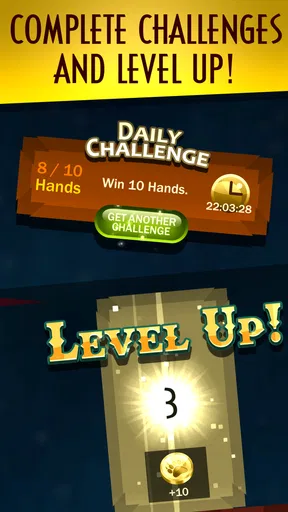
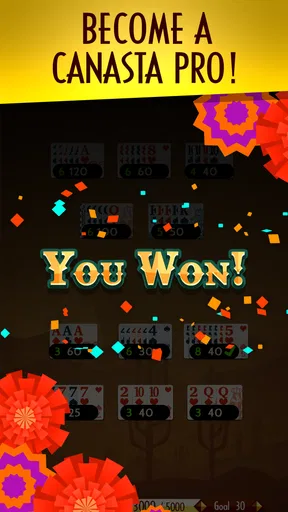
Our Review of Canasta
 Analysis by Appyee
I have always liked card games that reward memory and patience more than quick reactions, and Canasta from North Sky Games fits that mood well. It takes the familiar Canasta format and turns it into a convenient mobile game, with multiplayer included for players who want competition rather than a purely solo session. My overall view is positive: this is a comfortable choice for people who already enjoy Canasta or want a relaxed card game with more depth than a simple matching title, although it is not the best pick for anyone looking for fast action, elaborate presentation, or a completely free experience without purchase prompts.
The game is free to download and is suitable for Everyone, which makes it easy to recommend for a family tablet or a casual phone session. It has built a substantial audience, with over 500 thousand installs and a 4.5 average from around 18 thousand ratings. Those figures suggest that the basic formula works for a broad group of players, but they do not replace personal preference: Canasta is deliberately slower and more thoughtful than many modern mobile card games.
How the card game feels in everyday play
The appeal comes from the decisions that happen between the cards you draw and discard. A good turn is not simply about making the largest possible meld immediately. I often find myself weighing whether to expose a useful combination now, hold cards for a stronger future play, or discard something that might help the opponent. That small layer of uncertainty gives each hand a different rhythm and keeps the game from feeling like a fixed puzzle.
For a realistic everyday use case, I can see this working especially well during a short break, while travelling, or at home when I want something engaging without committing to a long action game. I can play a few turns, put the phone down, and return when I have more time. The experience suits players who enjoy thinking ahead while listening to music or relaxing in the evening. It is less suitable when I want instant entertainment, because the satisfaction comes from gradually shaping a hand rather than from constant visual or mechanical stimulation.
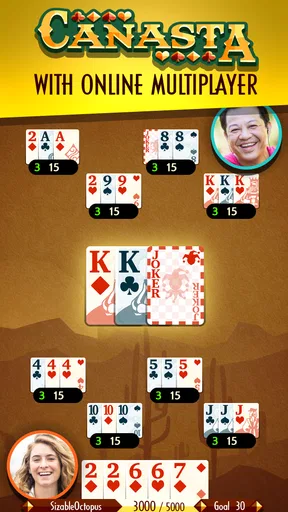
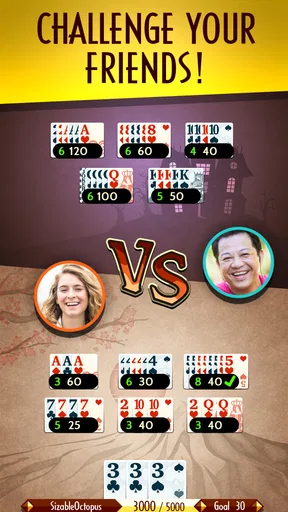
The multiplayer focus is important. Traditional Canasta is often enjoyed socially, and a digital version has to do more than reproduce cards on a screen. Playing against other people gives the familiar rules a stronger sense of purpose, since every discard can be read as a clue and every delayed play may be part of a wider plan. When I am in the mood for competition, multiplayer makes the game feel less like practice and more like a proper table game.
At the same time, multiplayer changes the ideal playing conditions. A thoughtful player may enjoy taking time to examine options, while another participant may prefer a quicker pace. That difference can make a session feel uneven. I would approach online play expecting a mix of opponents and playing styles rather than assuming every match will feel equally relaxed or equally competitive.
The game’s presentation is best understood as functional rather than spectacular. The cards and actions need to remain clear, and that clarity matters more here than flashy effects. I prefer a layout that lets me concentrate on the hand, the melds, and the discard choices instead of covering the table with distractions. Players who value a clean card-table experience should appreciate that focus, while those who choose games mainly for animation and visual novelty may find it plain.
One useful habit is to treat the discard pile as information, not merely as a place where unwanted cards go. Before making a move, I try to remember which ranks have already appeared and which ones the opponent seems interested in collecting. This is one of the less obvious strengths of a mobile Canasta game: the screen makes the state of the hand easy to revisit, but the strategic burden still belongs to me. The app does not remove the need to observe.
Another practical tip is to avoid playing every attractive combination as soon as it becomes available. Holding a card can protect a future meld, preserve flexibility, or prevent an opponent from guessing too much about my plan. That restraint is where the game separates itself from simpler card apps. The best move is often the one that keeps several options open, not the one that produces the most satisfying animation on the current turn.
What makes it stronger than a basic card app
Compared with a simple solitaire game, this Canasta offers a more social and strategic experience. Solitaire is excellent when I want complete control over the pace and do not want to depend on another player, but it cannot provide the same tension created by an opponent’s discard. Here, I have to consider not only whether a move benefits me, but also whether it gives another player a useful opportunity.
It also has more staying power than many lightweight card games that rely on a single repeated action. The rules create room for planning, risk management, and memory, so improvement feels connected to better judgement rather than merely longer play. I can return after a break and still have something specific to work on, such as reading the discard pile more carefully or becoming less eager to commit my strongest cards.
The free entry point is another advantage. I can try the core experience without paying first, which is helpful for anyone unsure whether Canasta’s slower style will suit them. The game includes in-app purchases ranging from $2.99 to $99.99 per item, so I would recommend checking the purchase flow carefully and deciding in advance whether I want to spend anything. The free download makes testing easy, but it does not mean every player will want to ignore the optional spending system.
For a family member who already knows the paper version, the game can be an approachable way to play when a physical deck and a group are not available. It may also help a newer player become comfortable with the general flow before joining a real table. I would not treat it as a complete substitute for sitting with friends, though. A digital opponent or remote match provides convenience, while a physical game provides conversation, shared pacing, and the small social cues that a phone cannot reproduce.
The game has been available since November 23, 2016, and its current version is 2.2.5. That history gives it the feel of an established title rather than a brand-new experiment. It runs on Android 7.0 or later, which covers many older devices, although anyone using an especially old phone should still check compatibility before planning around it. The important point for me is that the game is easy to place into an existing routine: it does not demand a powerful gaming device or a large time commitment to make sense.
The weaknesses I would consider before installing
The biggest limitation is the narrowness of its appeal. If I do not enjoy card-game strategy, Canasta will not suddenly become exciting because it is on a phone. The rules ask me to remember what has been played, judge risk, and accept that a good outcome may require waiting. Players who prefer quick rounds built around reflexes, constant rewards, or dramatic progression should probably choose a different genre.
There is also a learning curve for people who have never played Canasta. The basic idea becomes manageable with practice, but the strategic details are not instantly obvious. A new player may understand how to place cards while still making poor decisions about timing, discards, and the value of keeping options open. I would give the game several sessions before deciding that it is too complicated. On the other hand, someone wanting a game that explains itself in seconds may find this effort excessive.
Multiplayer is a strength, but it can also be a source of frustration. The quality of a match depends on the opponent, the pace, and how seriously both players approach the session. A player who wants a predictable solo experience may prefer solitaire or a traditional offline card app. Canasta is the better choice when interaction and uncertainty are part of the attraction, not when they feel like interruptions.
The monetization deserves a measured response. A free game with optional purchases can be perfectly reasonable, but the listed purchase range is wide enough that I would not tap through any payment screen casually. My advice is simple: enjoy the free portion first, decide whether the game has become a regular habit, and only then consider spending. If the presence of in-app purchases bothers you on principle, a paid card app with a single upfront cost may be a more comfortable alternative, even if it offers fewer social features.
Presentation may also divide players. I see the restrained card-table approach as useful because it keeps attention on the hand, but someone expecting a highly polished modern game may judge it as basic. North Sky Games has chosen a format where rules and play matter more than spectacle. That is a sensible priority for Canasta, yet it means the app will not satisfy people who want a constantly changing visual experience.
One trade-off I noticed in the way I approach the game is that convenience can reduce preparation. With a physical deck, I naturally slow down, organize the table, and pay attention to the people around me. On a phone, it is easy to open a match while distracted and then blame the game when I miss an important clue. I get much more from it when I silence other notifications and treat each hand as a small thinking exercise instead of background entertainment.
Who should choose this version
I would recommend it first to players who already know Canasta and want a portable way to play. The familiar structure means the app can fill the gap between in-person games, especially when friends or family are not nearby. Multiplayer adds the most value for that audience, because it preserves the competitive element that makes Canasta more interesting than arranging cards alone.
It is also a good candidate for patient beginners. If I were teaching someone who enjoys rummy-style games and does not mind learning through repeated hands, I would suggest starting slowly, paying attention to the discard pile, and resisting the urge to chase every immediate combination. The free price makes that experimentation less risky, while the Everyone rating makes it suitable for a wide household audience.
I would skip it if my priority were a completely offline, interruption-free card game with no social uncertainty. In that case, solitaire or another single-player alternative would be a better fit. I would also look elsewhere if I wanted tournaments, a strong progression system, or the spectacle of a premium digital board game. Canasta’s value is concentrated in the card decisions themselves, not in a large collection of extra activities.
For new players, my practical approach would be to focus on three questions each turn: what can I safely combine now, what might the other player be collecting, and which discard reveals the least about my own plan? Those questions make the learning process more useful than simply chasing the highest visible score. They also explain why the game can remain interesting after the basic rules become familiar.
The audience size is reassuring without being a reason to install by itself. With around 4.1 thousand written reviews, the game has attracted enough discussion for its long-term appeal to be more than a one-day curiosity. Still, I would judge it by the kind of attention it asks from me. A large audience cannot make a deliberate card game feel fast, and that deliberate pace is either the central pleasure or the central problem depending on the player.
My final recommendation
Canasta succeeds because it respects the underlying card game. It gives me a convenient place to play a thoughtful, competitive hand without turning the experience into an unrelated arcade product. The strongest evidence is the combination of approachable free access, multiplayer play, and enough strategic depth to reward observation. The real appeal is not speed; it is learning to make better decisions with incomplete information.
Its limitations are equally clear. The pace can feel slow, beginners may need time to understand why a seemingly good move is actually risky, and the in-app purchase range means I would keep an eye on spending. The presentation is focused rather than lavish, and multiplayer will not suit people who want total control over timing. None of those issues ruins the game, but they should shape expectations before downloading.
After spending time with Canasta, I see it as a dependable recommendation for fans of classic card games, casual competitors, and families looking for a digital version of a familiar pastime. I would tell a friend to try it if they enjoy planning, memory, and the tension of deciding when not to play a card. I would point them toward a different option if they want rapid action or a purely solo experience. For the right player, this is a calm but genuinely demanding card game that earns its place on a phone through thoughtful play rather than unnecessary extras.
Verdict
Strengths of Canasta
- Classic Canasta rules are easy to learn for card-game fans.
- Smooth gameplay works well for short sessions or longer matches.
- Helpful hints make it more approachable for beginners.
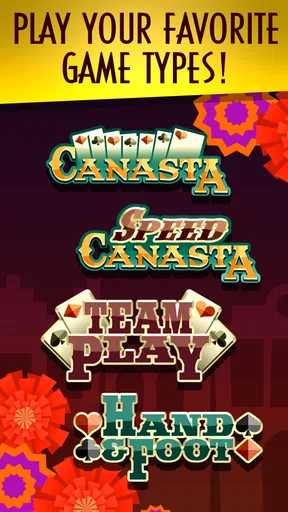
- Different game modes add variety beyond standard matches.
- Clear card layouts make melds easy to follow on small screens.
Limitations of Canasta
- Some features may require an internet connection to work properly.
- AI opponents can feel predictable after extended play.
- Ads may interrupt the experience in the free version.
- Advanced players may want more rule and scoring customization.
- Matchmaking may take time when fewer players are online.
Other Releases by North Sky Games
View All
Rummy 500
Card4.6
Similar Picks in This Category
View All
Solitaire - Classic Card Games
MobilityWare4.6

UNO!™
Mattel163 Limited4.3

Spider Solitaire: Card Games
MobilityWare4.6

Solitaire.com - Classic Cards
Tripledot Studios Limited4.7

Plants vs. Zombies™ Heroes
ELECTRONIC ARTS4.1

Hearthstone
Blizzard Entertainment, Inc.4.1
Frequently Asked Questions
What is Canasta, and how is the game played?
Canasta is a classic card game based on forming melds, usually sets of cards with the same rank. The objective is to score points by creating combinations and completing canastas, which are groups of seven cards. Depending on the version, you can play against computer opponents, online players, or friends. The app generally explains the rules, but beginners may need a few rounds to understand scoring and special cards.
Can I play Canasta offline without an internet connection?
Many Canasta apps offer offline play against artificial intelligence, which is useful when traveling or when you have limited connectivity. However, online multiplayer, leaderboards, advertisements, cloud synchronization, and some social features normally require an internet connection. Before downloading, check the app’s store description because offline availability can differ between versions and may depend on the selected game mode.
Does Canasta support multiplayer games with friends or other players?
Canasta commonly includes multiplayer options, although the available features depend on the specific app. Some versions let you invite friends through private rooms, while others match you with players from around the world. You may need to create an account or connect a social profile. It is also worth checking whether real-time games, turn-based matches, chat, and cross-platform play are supported.
Is Canasta free to download, and does it include purchases or advertisements?
Most Canasta apps can be downloaded for free, but they may be supported by advertisements, optional purchases, or both. Paid items can include ad removal, extra coins, cosmetic themes, tournament access, or additional features. Some applications also use energy or limited-play systems. Review the in-app purchase information carefully, especially if children may use the device, because prices and subscription terms vary.
Is Canasta suitable for beginners and older players?
Canasta is generally suitable for beginners, families, and older players because the basic controls are simple and matches can often be adjusted to different difficulty levels. Helpful tutorials, rule summaries, hints, and slower gameplay make learning easier. Nevertheless, the scoring system and rules concerning wild cards, freezes, and minimum meld values can be confusing at first, so a practice mode is especially valuable for new players.
Play our best games!


